Albert Tan Sin Hon · 陳信宏
Law. Learning. A little noise.
Yes, there's
music.

Law. Evidence.Human lives.

I study how legal commitments become effective in the institutions that shape people's lives. My PhD research at the University of Groningen examines ESG law, legal pluralism and regulatory coordination in Asia. A wider developing agenda connects this work with international relations, political economy, education and intellectual history.

Institutions, judgement and human capability.

How should institutions use knowledge, exercise judgement and remain answerable to the people affected by their decisions? Law provides the foundation for this inquiry. The directions below connect published work, public manuscripts and research still taking shape.

Sustainability & legal accountability

When does a reporting standard become an enforceable obligation? My comparative work examines how legal systems in Asia connect sustainability disclosure with supervision, liability and remedies.

Read the journal articles
Law through systems & technology

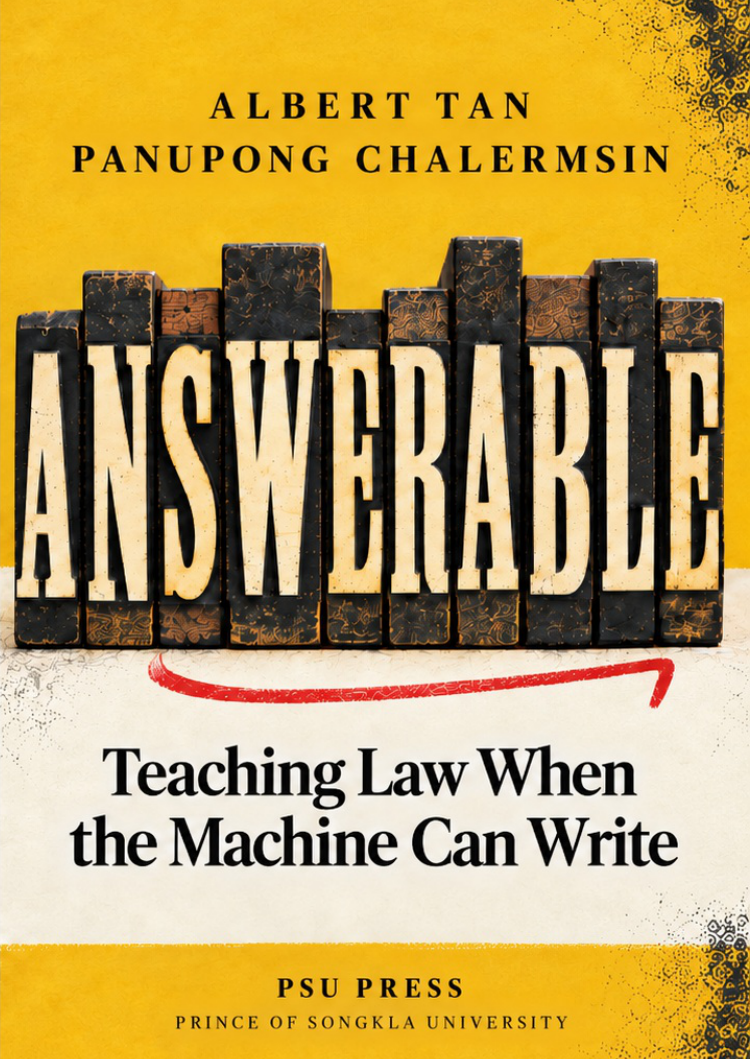
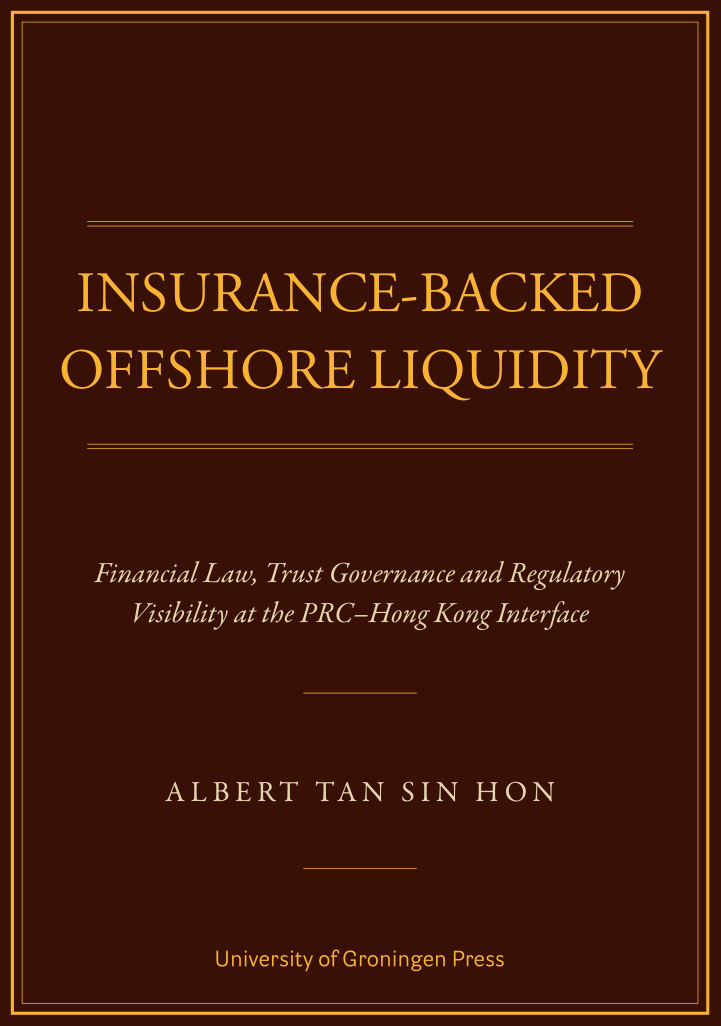
Forms, procedures and predictive systems influence how law operates. My public manuscripts examine how those arrangements distribute responsibility and what makes a consequential decision open to meaningful challenge. My forthcoming book extends the institutional inquiry to financial law, trust governance and regulatory visibility.

Explore the forthcoming book
Political economy & human capability

This developing strand asks how institutional procedures shape people's real opportunities. It connects administrative judgement, access to public support and the practical ability to question a decision.

The concern is concrete: a formal entitlement matters differently when a person cannot use it.

Education & professional judgement

How can institutions learn from the people who teach and work within them? My developing research considers expertise, educational change and feedback. In legal education, this includes making a learner's reasoning visible when generative AI can produce the written answer.

Explore teaching and writing
Intellectual traditions & culture

Chinese legal history and European social philosophy offer different resources for examining authority, freedom and institutional criticism. My public work on the Qianziwen sits alongside developing inquiries into Hegel, Marx, legal recognition, religion and culture.

Law in a Thousand Characters
Sport & private governing power

Sport offers a setting in which private institutions make decisions with significant consequences. My scholarship examines external legal review, retained regulatory authority and claims to recognition in amateur mixed martial arts.

Read the sports governance article

A further developing strand examines environmental responsibility in space activities. Across these settings, the question remains practical: which authority can act, on what evidence, and with what possibility of correction?

Big questions.
Actual pages.

Two forthcoming books, selected journal articles and public manuscripts. Each has its own place in the developing body of work.

Publication details follow the linked institutional records. See my research profile for the wider record.

Selected manuscripts on SSRN

Explore the SSRN profile

These public manuscripts extend the inquiry into jurisprudence, technology, intellectual history and international relations. The links below identify SSRN versions; inclusion here does not establish journal publication or peer review.

  1. Institutions
    July 2026

    Law in Books, Law in Action, Law Through Systems

    How forms, routing rules and reporting arrangements translate legal duties into institutional practice.

  2. Law & technology
    July 2026

    The Bad Man after the Machine: Holmes, Prediction, and Algorithmic Law

    Responsibility and meaningful challenge when institutions use predictive systems to make consequential decisions.

  3. Chinese legal history
    September 2026

    Law in a Thousand Characters: Punishment, Adjudication and Commentary in the Qianziwen

    Authority, punishment and adjudication as represented in an elementary text and its commentary.

  4. Sports governance
    September 2026

    Managing Recognition Claims in Amateur Mixed Martial Arts

    Recognition, organisational legitimacy and federation affiliation in amateur sport.

  5. Research governance
    October 2026

    Binding Promises in the US-China Contest for Scientific Talent

    Scientific mobility, research security and the credibility of institutional commitments to researchers.

Dates refer to posting on SSRN. Each record provides the abstract, version details and authorship.

RegNav Evidence Ledger.

A research prototype for following a legal proposition back to its sources.

A legal argument depends on more than a plausible conclusion. RegNav links propositions to sources and precise locations, records human-review declarations, and brings the connections into an evidence matrix.

It identifies structural gaps so a reader can see where further work is needed.

The current prototype is an offline Python tool with a quickstart, runnable examples, a documented schema and 24 automated tests. A Singapore sustainability-reporting case connects two narrow claims to four official sources.

Explore RegNav on GitHub

Reading a legal claim

Proposition
What is being asserted?
Source
Which authority supports it?
Location
Where is the supporting passage?
Review
What has a reader checked?

A structural check does not verify a legal claim. Fictional training material is labelled, and the source-grounded case remains unreviewed pending independent human review. External usability evaluation is a next step.

Make the reasoning visible.

I am interested in how legal reasoning can be taught and assessed in the presence of generative AI. A convincing written answer leaves an important question open: what does its author understand?

The public 55-minute exercise asks learners to trace claims, inspect sources and explain their reasoning. It includes fictional training material, an answer key and a rubric, with a paper or spreadsheet route as well as the Python tool.

Explore the teaching exercise

For another way into ideas, Learning with Bert shares notes, insights and lessons through four public video collections.

Creative practice and a life in motion.

Music, education and Brazilian jiu-jitsu are also part of my life. They give expression and practice a place alongside the written work.

Listen & learn

Bert Chan 陳信宏

I create music as Bert Chan. Learning with Bert opens my collection of notes, ideas and lessons to anyone who wants to learn alongside me. Both live on my official YouTube channel.

  • 01冷冷的夜
  • 02像你一样II
  • 03窗外那场雨
Listen to music & explore the learning

Practice, discipline and the rules of sport.

I practise Brazilian jiu-jitsu. Sport is also a subject of my legal research, including how sporting institutions exercise authority and how external review changes the decisions they can make.

These activities sit within a wider life of learning and making. The public channel is a place to encounter that work in a different form.

Visit the official YouTube channel

For the academic side of this interest, see the article on international sport and the manuscript on amateur mixed martial arts.

Less small talk. More good questions.

Questions worth exploring together.

I welcome conversations about accountable institutions, comparative legal research, teaching and useful research tools. There is also room for creative collaborations that bring careful ideas to a wider public.

Contact via my institutional profile

Academic contact details are available through the University of Groningen.